I Went to Bolivia Where Businesses Survive on Stablecoins
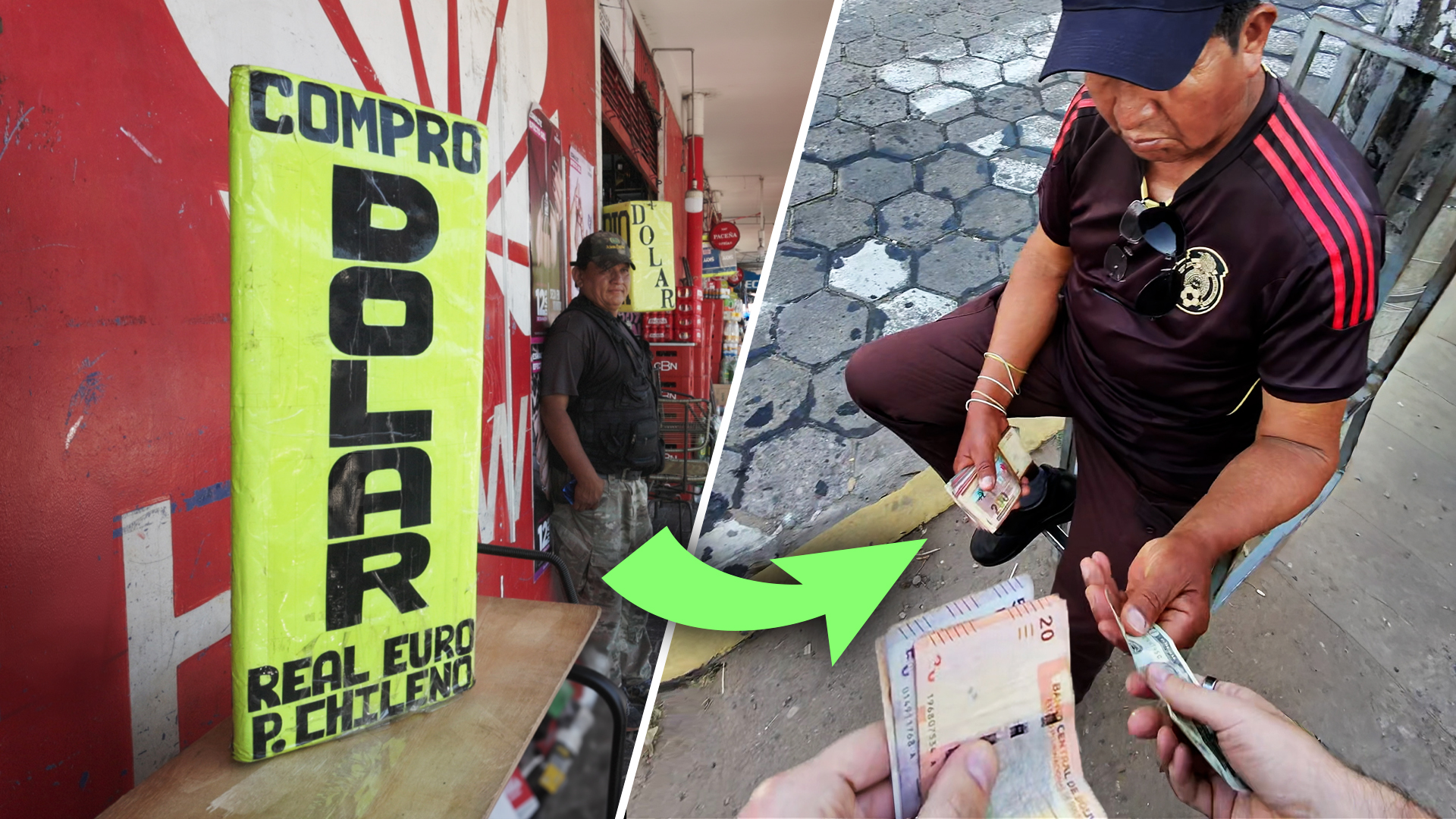


Bolivia is facing a severe economic crisis. The country is literally running out of dollars. Their foreign reserves have collapsed from $15 billion a decade ago to just $50 million today.
In June 2024, Bolivia legalized cryptocurrencies, and digital asset transaction volume exploded - growing over 500 percent in the past year.
To participate in the global economy, businesses are turning to stablecoins for access to dollar assets.
From Binance peer-to-peer trading to stablecoin-powered credit cards, we explore how people survive when their country runs out of dollars, and how stablecoins are being used for global spending.
This episode of Money Trails is presented by Stellar Development Foundation.
New episodes straight to your inbox.
Get them as soon as they're published.
Transcript
Justin Norman: Tengo veinte dolares. Que precio?
I have $20. What price?
Informal Trader: 240.
Justin Norman: This guy is about to sell me local currency for double the official rate, but he’s not the only one I can buy from. These informal money traders are everywhere… in the city square, in the markets, even here in a Burger King parking lot. It’s a sign of how rough the economy really is in this country. So where am I? Let’s take a step back.
I'm interested in learning about what everyday people do when their economies break, and how they find ways to solve their own problems. And I started hearing about this one place that I don’t think is on many people’s radar.
News Anchors: A new chapter has begun in Bolivia… The newly inaugurated president has a big challenge ahead… Bolivia is going through its worst economic crisis in 40 years.
Justin Norman: Bolivia is one of the fastest-growing crypto and stablecoin markets. There’s a correlation with this and its declining economy.
News Anchors: Bolivia’s government is letting state energy firm YPFB use cryptocurrency to pay for fuel cargoes and to pay companies.
Justin Norman: But what’s actually happening on the ground? So I’m headed to Bolivia to explore how businesses are using stablecoins to survive.
Justin Norman: Here in Santa Cruz, the economic capital of Bolivia, this is the first thing I saw… a row of trucks lining the side of the highway..These trucks are waiting for diesel, and there's a shortage. Bolivia's government is running out of dollars. And as a result, the country can't import diesel. So if there's not enough dollars for something that critical, how are small businesses surviving?
Guillermo Barea: Me nombre es Guillemo Barea. Soy gerente general de CoperAgro.
My name is Guillermo Barea. I am the general manager of CoperAgro.
Justin Norman: CoperAgro is an agricultural supplier and like many businesses here, they’re struggling to access dollars.
Guillermo Barea: Nosotros importamos noventa y nueve por ciento de los productos de afuera de diferentes países y no se producen ni el uno percent localmente en in consumos agrícolas. Entonces el tema de pago al proveedor fue bastante crítico. Y a través de esa necesidad, tuvimos que buscar la alternativa que hay disponible para poder pagar a afuera al proveedor.
We import 99 percent of products from abroad from different countries and not even one percent is produced locally in agricultural inputs. So the issue of payment to suppliers was quite critical. And through that need, we had to look for the alternative that's available to be able to pay suppliers abroad.
Justin Norman: How did you solve these dollar problems?
Guillermo Barea: Actualmente estamos haciendo vía vía banco. Me atrevo a decir, no estoy tan seguro triente por ciento ya vía banco. Pero la gran mayoría hemos estado haciendo criptomonedas.
Currently we're doing via bank... I dare say, I'm not so sure, thirty percent via bank. But the vast majority we've been doing with cryptocurrencies.
Justin Norman: Because of its dollar shortage, Bolivia is one of the fastest growing crypto markets in the world. Crypto was illegal in Bolivia, until June 2024, when regulation led to an explosion of growth. Bolivia's central bank reports that digital‑asset transaction volumes skyrocketed, from $46.5 million in the first half of 2024 to almost $300 million in the same period of 2025, a year over year growth of 500 percent.
Guillermo Barea: Hacemos la compra de los USDT por Binance.
We buy the USDT through Binance.
Justin Norman: But if the economy got so bad that traditional businesses are trading crypto on peer-to-peer exchanges, then how did Bolivia get here?
News Anchor: Bolivia’s economic miracle was not sustainable.
Justin Norman: Bolivia's main export is natural gas, but its gas production has fallen severely since 2014, impacted by a lack of new investments and leading to declining revenue. Between 2014 and 2024 Bolivia's oil revenues decreased from $5.5 billion to $1.6 billion.
Meaniwhile, the country has subsidized fuel. In 2024, more than half of Bolivia's fiscal deficit stemmed from fuel subsidies alone. And its continued government spending has depleted its foreign exchange reserves, which have collapsed from $15B in 2014 to $50M in actual liquid currency in 2024.
Meanwhile, the informal market for Dollars has grown in Bolivia, because Dollars can't be accessed the traditional way - through the banks.
Justin Norman: Hola, tengo dolares y quiero bolivianos… a que precio?
Hi, I have dollars and want bolivianos… at what price?
Justin Norman: Because of dollar shortages, banks restrict the amount of dollars their customers can access. Card spending is limited to just $100 per month. So this has led to a parallel economy.
Officially, it costs a fixed rate of BOB6.96 to buy $1. But banks don't actually have dollars to offer you at that rate. Today, Bolivians who need Dollars turn to the informal market, where the "real" price at the time of my trip was $1 is around BOB13, or twice as expensive as the official rate.
And at CoperAgro, Guillermo's daughter Karina is the one actually buying stablecoins at that rate.
Karina Barea: No, que sabemos que igual comprar los dólares. Este vain era comprarlo al doble o al triple, dependiendo como sub bien y bajaba. Pero también cuando comparábamos todos los días las tasas de cambio en los bancos para poder realizar las operaciones, aún así ahorrábamos y aparte que tampoco te daban la seguridad, porque a veces te decían un día, ay, sí, podemos sacar cierta cantidad. Esperabas dos, tres días, te llamabas y te decían ah, no, ya no.
We know that buying dollars through Binance was buying them at double or triple the price, depending on how it went up and down. But also when we compared the exchange rates at banks every day to be able to do operations, we still saved money. And besides they didn't give you security, because sometimes they'd tell you one day "oh yes, we can take out a certain amount." You'd wait two, three days, you'd call them and they'd say "ah, no, not anymore."
Justin Norman: But this method has led to complex payment operations…
Karina Barea: Primero comenzamos probando no con unos 20, 50. Y de ahí nos hicieron unas operaciones de uno. 200 250,000. Pero igual sigue ese problema de que no podemos comprar cantidades grandes de una sola operación. Tenemos que dividirlas hasta veces en 13, 14, 15 pagos, pero la la única forma, no?
First we started testing with about $20-50. And from there they did operations for us of $200-250,000. But still that problem remains that we can't buy large quantities in a single transaction. We have to divide them sometimes into 13, 14, 15 payments, but it's the only way, right?
Justin Norman: CoperAgro is making up to 15 small transactions per month on Binance to buy $250,000 in stablecoins, and then they have to convert it to dollars to pay their suppliers in fiat.
Guillermo Barea: Luego pasamos al Towerbank nos du sdt y a las 24 horas los transformamos en el mismo Towerbank a dólares y del Towerbank. Pagamos a Noruega, pagamos Uruguay y pagamos a China. Pagamos argentina al proveedor que necesitemos pagar. Así la forma que hemos estado pagando actualmente en medio cantidad.
Then we transfer to Towerbank our USDT and within 24 hours we transform them in the same Towerbank to dollars, and from Towerbank we pay to Norway, we pay to Uruguay, and we pay to China. We pay Argentina, to whatever supplier we need to pay. That's how we've been paying currently in large quantities.
Justin Norman: CoperAgro has hacked together a solution, but when Bolivia recently legalized cryptocurrencies, it led to a growth in more formal apps.
To get around Santa Cruz, I paid my uber drivers with Meru, a local crypto wallet built on the Stellar blockchain, that allowed me to pay with stablecoins via QR code. The USDC was converted to Bolivianos at the parallel rate, so this ride for 13 Bolivianos cost me just over $1. If I had paid with my card at the official rate, it would have been twice as much.
For Bolivians, Meru is enabling access to Dollar stablecoins, in lieu of actual dollars from the banks. But the country wasn't initially on Meru's radar…
Carlos Neira: Bolivia has been a surprise.
Justin Norman: That's Carlos Neira, a co-founder of Meru.
Carlos Neira: We decided to go like a non-traditional way as a startup, we didn't launch in one country, try to grow that country before going to a second and third market. We launched our product and we made it available to anyone basically globally. Last June, the government or the Central Bank of Bolivia made a decree in which the use of crypto assets or digital assets was no longer illegal. And all of a sudden we started to see a little blip of adoption from Bolivia.
Also, there were a couple of content creators that found out about Meru and suggested the use of the product as a very good alternative as a workaround to the problems that the country is having. And that was what create d that spike in demand that we were seeing back in our, in our office and saying, what's going on with Bolivia.
Justin Norman: So Bolivia wasn't on your radar at all?
Carlos Neira: No. We realized that our product, which was built with, I mean a general requirements that we thought could be attractive to people in Latin America was right spot on what a person in Bolivia would require. And so we started to develop functionality and on and off ramp capabilities more relevant and more appropriate for Bolivia.
Justin Norman: The specific feature that led to Meru's growth in Bolivia is its stablecoin cards, issued by the stablecoin infrastructure company, Rain.
Carlos Neira: And especially for Bolivia it of course it makes sense to use the card for US dollar expenses. So this is a very convenient solution for small businesses, for entrepreneurs and for travelers who normally will spend abroad.
Justin Norman: Stablecoin-linked cards bridge the gap between stablecoin and fiat, enabling Bolivians to access USD stablecoins and to pay global merchants in fiat anywhere in the world. Global merchants don’t accept local currencies, which means that buying online requires you or your bank to have dollars.
Jafet Justiano: Horita como Bolivia no fabrica nada, entonces prácticamente todos los productos son importados.Normalmente los productos que importamos en su mayoría son de China.
Right now, since Bolivia doesn't manufacture anything, so practically all products are imported.Normally the products we import, the majority are from China.
Justin Norman: That's Jafet Justiano, an entrepreneur, importer, and Meru user.
Jafet Justiano: Prácticamente fue una solución diferente y más económica y accesible. Meru nos brindó dos cosas. Primero la tarjeta virtual, ¿no? Es decir, que nosotros podíamos recargarlas a través de bolivianos, hacer un cambio con USDT o USDC, tener los dólares en nuestra tarjeta y la mayoría de plataformas como eBay, como Amazon, como Alibaba, como Taobao, todas estas plataformas te permiten pagar a través de tarjetas. Pero adicional a eso, Meru brindó una sección donde podías hacer giros de Banco a Banco, ya sea de Brasil, ya sea de China, Estados Unidos. Entonces, prácticamente si el proveedor no te aceptaba un enlace de pago, podías pagarle con los datos de su cuenta bancaria que estés proporcionada. Entonces teníamos las dos opciones. Yo lo que siento prácticamente es que como bolivianos, como importadores, como emprendedores realmente, o sea, nos hemos visto muy afectados, ¿no? Y eso se refleja en los ingresos.
For us with Meru it was practically a different, more economical and accessible solution. Meru gave us two things. First, the virtual card, right? Meaning we could reload it through bolivianos, make an exchange with USDT or USDC, have the dollars on our card, and the majority of platforms like eBay, like Amazon, like Alibaba, like Taobao, all these platforms allow you to pay through cards. But in addition to that, Meru provided a section where you could make bank-to-bank transfers, whether from Brazil, China, United States. So practically if the supplier didn't accept a payment link, you could pay them with their bank account data that they provided. So we had both options.
What I feel practically is that as Bolivians, as importers, as entrepreneurs really, we've been very affected, right? And that's reflected in income.
Justin Norman: So this is what it looks like when a country runs out of dollars. Street traders outside Burger King. A 30-year-old company doing peer-to-peer crypto trades. And new stablecoin infrastructure enabling global spending.
I don't want to overstate the role that stablecoins are playing in Bolivia. The vast majority of the country doesn't use them, and has probably never heard of them. But by giving Bolivias permissionless access to dollar assets, stablecoins are truly a lifeline for the businesses that literally can’t access dollars through the banks.
When I was leaving Bolivia, I was intrigued to see in the duty free shop that the prices were in USDT.The duty free shop charges in Dollar digital assets at the parallel rate, meaning that they will receive twice as many Bolivianos than the official rate. So if businesses or companies bringing dollars into the country choose to do so on the parallel market, it may make Bolivia’s dollar scarcity even worse. And if so, stablecoins will play an increasingly important role in the country.
On the next episode of Money Trails, we explore how the global financial ecosystem doesn't work for millions of people in emerging markets around the world…