What China Taught Me About Global Trade
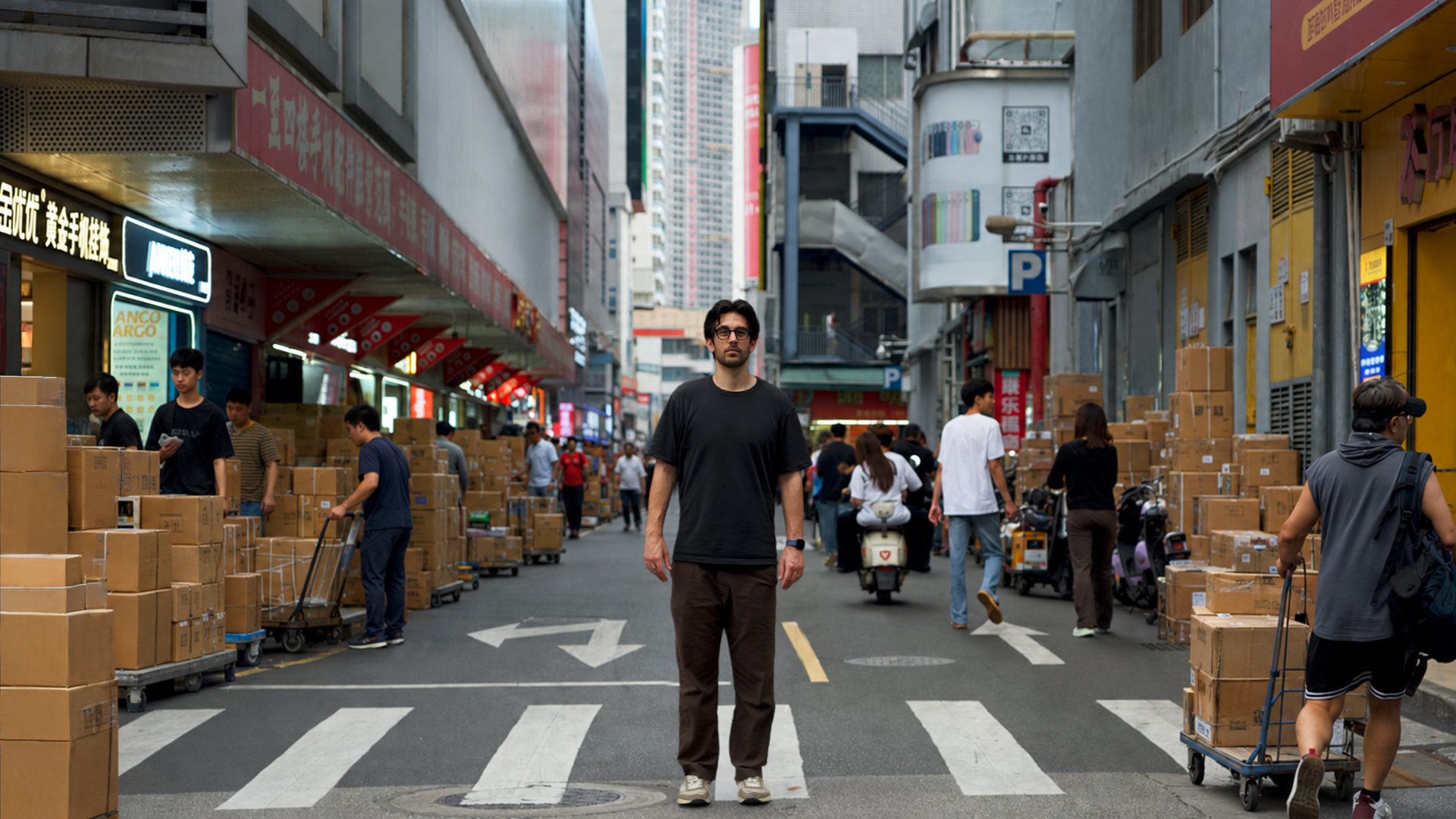


China's manufacturing scale has no historical precedent. $3.8 trillion in exports in 2025. A $1.2 trillion trade surplus — the largest any country has ever recorded. China is the top import partner for roughly 40% of the world's countries.
China now trades 50% more with the Global South than with the US and Europe combined.
But trade grew faster than the plumbing underneath it. The banks, correspondent networks, and currency markets that move money between these regions weren't built for this volume, and in many cases, barely exist at all.
Which leaves Chinese exporters with a problem: how do you get paid by countries that aren't well connected to the global financial system?
To answer that question, we visit the electronics markets of Shenzhen, the historical trade ports of Guangzhou, and the financial center of Hong Kong.
This episode of Money Trails is presented by the Stellar Development Foundation.
New episodes straight to your inbox.
Get them as soon as they're published.
Transcript
News Anchor: A global economic powerhouse, the world's manufacturing superpower… In many of these fields like green energy and robotics China has now taken the lead. China has made itself rich by being able to find markets overseas for its manufactured goods.
Justin Norman: This is Shenzhen, China, where all of your electronics are made. 40 years ago, none of these buildings existed. This city was a fishing village. And today Shenzhen is the electronics manufacturing capital of the world. China did nearly $3.8 trillion in exports last year and runs the biggest export surplus in history.
News Anchors: China has announced a record trillion dollar trade surplus… Almost $1.2 trillion in 2025.
Justin Norman: But these headlines aren't telling the whole story. I've spent the last few years filming across countries in places where almost all the goods come from China. China now trades 50% more with the global South than with the US and Europe combined. And in these markets, the customers have a problem the headlines rarely mention - do you use the banks at all? - making payments across borders and participating in a global financial system that wasn't built to serve them. These markets are actually at the center of China's economic score.
I came to China to understand how it trades with the rest of the world, and the answer to that question lies in the electronics markets of Shenzhen and the historical trade ports of Guangzhou, and in the financial center of Hong Kong.
Justin Norman: I'm here in Huaqiangbei, the electronics manufacturing capital of the world. And the thing I hear the most is this.
Cases, chargers, cables boxed up, made in China on the label, and whisked away to every corner of the earth. This is where it all begins, and where I, like these products, have to start my journey too.
China is the top import partner for roughly 40% of all countries worldwide. This bustling market here in Shenzhen is representative of something existentially important for China.
Parts, accessories, cases, electronics, anything you could ever possibly need. It's available here at this wholesale market.
Today, China's manufacturing scale is almost impossible to comprehend.
News Anchors: China’s economy has developed at an extraordinary rate… China has quietly become… the global powerhouse. Will China soon become the world's leading economy?
Justin Norman: The Chinese government targets 5% annual growth, but a healthy economy grows by its people buying things. And Chinese consumption is only 38% of GDP versus 70% in the US and 60% globally. That gap has to be filled by something.
China has built an economy that produces far more than its own people can consume, which means it's structurally dependent on the rest of the world buying the difference.
Exports make up a fifth of China's economy, but accounted for nearly a third of its GDP growth last year.
And the response to China’s export dominance has been a wall of trade barriers going up around China's most valuable markets.
News Anchor: The EU has slapped additional tariffs on Chinese electric vehicles to protect its own struggling industry.
Justin Norman: The trade war has increasingly been a West versus China story. US tariffs. EU tariffs.
News Anchor: Donald Trump is raising tariffs against China to 125 percent…
Justin Norman: Naturally, people think about trade with China from an overwhelmingly US-centric perspective. But I think the actual story is with the Global South.
China now sells more to the Global South than to the US and Western Europe combined.
For the first time in 2024. Countries in the Global South accounted for more than 50% of China's total foreign trade, and they now contribute more than half of China's trade surplus with the world. Other developing countries - Brazil, India, Indonesia and others - have imposed measures to protect their own growing industries, but it's hard for them to compete.
So China's exports to the Global South are accelerating, we can expect it to continue growing. And this is particularly interesting because it should work in the opposite direction…
Justin Norman: There's an economic theory known as comparative advantage. As countries get richer and wages rise, they should move up the value chain and shed low-value, labor-intensive work to poorer countries.
Archive: They make flight bags, caps and hats, shoes, chairs, all kinds of things.
Justin Norman: But China is breaking the pattern. Wages have risen enormously. Yet China holds a third of the global textile market and remains its largest exporter, while simultaneously leading in EVs and electronics. It's not just moving up the value chain; it's occupying the entire chain at once, from the cheapest goods to the most advanced.
News Anchor: …As global sourcing patterns shift away from China.
Justin Norman: While China has lost some low-end jobs, it can't let the low end go, even if the theory says it should, because it has hundreds of millions of workers who need those jobs. President Xi has said it outright: “we must never deindustrialize.” So China will continue to compete on the low end, while simultaneously competing on the high end.
Justin Norman: So back to the Global South.
As China’s trade with this region continues to grow - at both ends of the spectrum - it introduces a new problem: how to get paid from all of these countries where the financial infrastructure isn’t as well connected to the global economy.
I was recently in Lagos, Nigeria, where I visited Computer Village, the largest electronics market in Africa. And throughout the market, you'll see brands that you might not recognize.
Justin Norman: Tecno, Tecno. Infinix. Infinix. Infinix. Infinix. Infinix. Tecno, Tecno. Everything is imported from China. How does that work?
These are all brands from the phone manufacturer Transsion, a Chinese company that is the largest maker of cell phones in Africa. But that doesn't sell a single phone inside of China. It's the Chinese export economy at work.
We take for granted all the things that have to happen for these phones to get to customers. Exporters need to build the right relationships. Negotiations need to happen in different languages. The last-mile logistics and everybody needs to get paid. None of these things are easy, but nothing can work if payments don't work.
Justin Norman: So Nigeria buys a lot from China, but they have payments problems because most payments move across the SWIFT network, with correspondent banks in the middle. It can be expensive, slow, and lead to delayed payments for many countries in the Global South. And that’s an issue Chinese exporters are facing as their trade increases with these countries.
Vincent Yang: I was born and raised in Jiangsu province, where there are a lot of export businesses, bags, shirts at that point of time. People never think about collecting money because they always want to sell stuff. And the major trading partners are Western Europe and US.
Justin Norman: That's Vincent Yang, a co-founder of the Hong Kong-based payments company Obita. He used to work for Ant Financial and Alibaba, but his understanding of these payments problems dates back to his upbringing.
Vincent Yang: But this has been changed significantly in the past years. You've seen a lot of Chinese exporters are selling to emerging markets instead. Africa, Asian countries, and Latin America.
Vincent Yang: And now become a problem because the money was stopped and was caused delay and even was blocked by the bank due to whatever reason, maybe supporting documents, the contracts because a lot of business was done by trust or referral.
Vincent Yang: You know a lot of factories running kind of like on the clock. And if you can not receive the money on timely means, you cannot pay your salary on timely, which means you have to cause a lot of delays, not only from a business perspective, but also labor cost perspective. So that will cause a lot of problems.
Justin Norman: How common of a problem is this for Chinese manufacturers?
Vincent Yang: It depends on the country I guess. And also it depends on the corridor. In a lot of countries it's smooth enough. But still in some of the countries there are some existing issues, simply because these countries trade increased significantly in the past 18 months or so. However, the whole network of the payments didn't adjust that quickly.
Justin Norman: So the bet is that new payments infrastructure is going to be really important for China’s expanding global trade. But it will need to be managed… because despite how much China manufactures for export and how important exportation is to the economy, trade with China is actually a distinct and unique challenge. And it always has been.
Justin Norman: The Chinese city of Guangzhou was once called Canton. This was, for nearly a century, the only place in China where foreign merchants were permitted to trade. It was called the Canton System, and it tells you something important about how China has always understood its relationship with global commerce.
Ships anchored here along the banks of the Pearl River and offloaded their cargo into thirteen trading houses lining the waterfront, each flying the flag of a different nation, a small strip of foreign ground in what was then the wealthiest Chinese city.
And they couldn't trade directly. Everything went through licensed Chinese intermediaries, the Hong merchants who controlled the flow of goods, and the flow of money between China and the outside world.
The Canton System ended in 1842 when Britain first opened the ports after the First Opium War. But as China’s economy continues to grow in this century, it’s back to trading on its own terms.
Standing here on Shamian Island now - the quiet streets, the colonial facades, the Pearl River still moving past - it's easy to miss how consequential this place was. But the parallel to today is hard to ignore. China's always been fiercely independent and concerned about foreign influence. But now, more than ever, it also has to trade.
Today, when you trade with China, the money is probably moving through Hong Kong.
Archive: Hong Kong will thereby be restored to China and within the framework of one country, two systems, it will continue to have a strong identity of its own and be an important international partner for many countries in the world.
Justin Norman: Justin Norman: I’m here in Hong Kong, one of the financial capitals of the world, and the gateway to China.
Hong Kong is a hallmark of China's one country, two systems policy, where Hong Kong's rule of law, common imports and convertible currency allow it to be China's proxy with the rest of the world.How China can participate in global finance and trade without fully subjecting their own country to the rules of global trade. Capital can move in and out without exposing the mainland to full openness.
News Anchor: China is going one step further, cryptocurrencies are strictly prohibited.
Justin Norman: And despite the fact that China explicitly bans cryptocurrencies...
News Anchor: China's increasing crackdown on crypto.
Justin Norman: Hong Kong has become a hub for stablecoin adoption for cross-border trade. Hong Kong has recently passed stablecoin legislation creating a clear licensing framework for the use of stablecoins.
Vincent Yang: Our company was incorporated right after the Genius Bill was passed. I guess we've seen a lot of trades happen among stablecoins, but there is no departments really regulated. For payment business, we have to do it under the place for regulated. Thanks to Genius Bill that we have a framework we can follow.
Justin Norman: I just think it's an important thing to talk about is the reason why stablecoins are being used. I think the default assumption often is like, oh, we're seeing this payment coming from Argentina or Nigeria. Like it must be money laundering or something, right? And it's like, no, it's people have to use it because they have problems. And if you can build regulation and parameters around their usage, it's going to be meaningful. It's going to facilitate global trade.
Justin Norman: Stablecoins are becoming an increasingly important tool for cross-border payments, enabling access to dollar-based assets in countries where dollars are scarce.
Justin Norman: How did you solve these dollar problems?
Guillermo Barea: The vast majority we’ve been doing with cryptocurrencies.
Justin Norman: And facilitating near-instant payments across currencies.
Ife Johnson: We help businesses and individuals who do business with Africa spend local currency with the ease of global currencies.
Justin Norman: How do you do that?
Ife Johnson: Stablecoins.
Justin Norman: Not surprisingly, they're being used more in cross-border trade with Hong Kong, especially as China trades more with the Global South.
Vincent Yang: As Obita, fiirst of all, we are a B2B cross-border payment company. Then we have this stablecoin. So by saying that, without stablecoin it makes sense to do that because the trade is so big. And with stablecoin, for us, is an accelerant to make the decision. So for me it's an easy yes to set up the business.
Justin Norman: But no one really cares about the fact that they're using stablecoins. It's just about getting business done, and that’s increasingly more important as trade with the Global South continues to grow.
Vincent Yang: The primary focus for the business owner is never about payments. It's all about get business done. Customer only cares about whether they can receive the money timely, efficiently, and whether this is through stablecoins or through fiat, I think this is less important to them, as long as we make sure that money is safe with the legit partner.
Stablecoin is just a form to conduct the trade. As a service provider, we should offer all the options to the clients.
Justin Norman: And you said before, like SWIFT works well in many instances. In many instances it doesn't though. And that's why we're seeing stablecoin adoption.
But it sounds like the payment companies that are kind of taking the most pragmatic approach are the ones that are saying, like, we're using whatever we need to use, depending on the corridors, depending on the rates.
Vincent Yang: Absolutely. I think, again, our goal is definitely not replacing anybody. We're trying to provide a one-stop solution for the corporates or for our clients where they can receiving or pay money easily worldwide. That's our goal
Justin Norman: And the reality is for a lot of those customers, they're servicing a lot of different use cases in a lot of different markets. You know, you have a lot of different payments providers, it's hyper fragmented.
Vincent Yang: And the most important thing, do clients really need to know they just want to receive the money. They just want to sell the glass to Nigeria, for example. A lot of exporters, they are trying to aggressively looking for new markets to sell, but they don't need to necessarily find new payment partners in different jurisdictions because that's not their core business.So we are serving as one of the services to provide to supporting their core business to go abroad. That's the that's our ultimate goal.